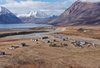
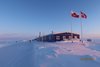
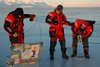
Aarhus University hosts a range of nationally significant Arctic research infrastructures, forming a critical foundation for both scientific discovery and advisory work. ARC brings these assets together, increasing their visibility, accessibility, and strategic use.
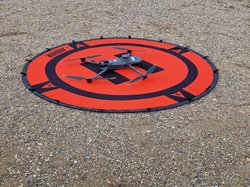
Advances in technology are essential to strengthening our understanding of the Arctic and enabling better decision-making across science, industry, and society. At the Arctic Research Cluster our work emphasizes the automation and integration of data collection across key Arctic systems, including the atmosphere, sea ice, terrestrial landscapes, rivers, and oceans. By improving both the spatial and temporal coverage of observations at landscape scale, we aim to provide more comprehensive, continuous, and reliable datasets to support research, monitoring, and forecasting.
ARC brings together expertise from multiple disciplines to design and build the next generation of technologies tailored to Arctic conditions. These efforts are driven by scientific priorities ensuring that developed solutions are practical, scalable, and impactful. In this way, technological innovation becomes a bridge between fundamental research and applied use.
With a strong legacy in long-term monitoring and field operations, ARC is well positioned to contribute to international leadership in translating scientific excellence into societal value. Collaboration is central to this approach.
By engaging with end-users and technology developers, ARC supports the co-creation of solutions that enhance Arctic operations. Through these efforts, technology becomes a key enabler for advancing knowledge, supporting sustainable development, and addressing the complex challenges facing the Arctic.
For further information and collaboration opportunities within the Technology in the Arctic, please visit Mechatronics and Robots at Aarhus University, and see examples of projects.
As a core ARC member, this group serves as a key point of contact, bringing expertise in the integration of mechanical, electronic, and software systems to develop intelligent and robust technological solutions. Their work spans the full innovation chain—from design and system integration to testing in advanced laboratory environments—and includes applications such as autonomous systems, drones, underwater robotics, and industrial automation.