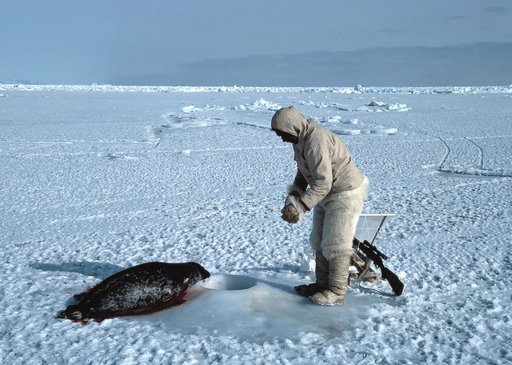
The Arctic is warming 4-fold faster than the global average, and that is opening The Arctic Gateway due to loss of sea-ice. This is causing an unprecedented pressure on local ecosystem services including marine mammals and fish due to increasing shipping, tourism, and resource exploration and exploitation having unpredictable consequences for local societies, including indigenous people. Regrettably, not only climate change is affecting the regions. The effects from climate change in the Arctic regions together with changes in biodiversity and long-range transport of pollution (=The triple planetary crisis; 3PC) challenge the livelihood that sustained indigenous and local communities for thousands of years. Climate change affects the composition of species and their distribution, which again have negative impact on local harvest of terrestrial and marine wildlife, important components of healthy country food and local society traditions and religion. On top of this, long-range transport of toxic industrial chemicals by ocean currents and atmospheric pathways including Perfluoroalkyl substances (PFAS) and polychlorinated biphenyls (PCBs), being persistent organic pollutants (POPs), up-concentrate together with mercury (Hg) in the Arctic marine food webs.
Members:
Relevant links: www.arcsolution.eu , https://tech.au.dk/en/about-the-faculty/news/show/artikel/scientists-in-search-of-the-sources-of-mercury-pollution-in-the-arctic , https://projects.au.dk/bonusbalthealth , https://ecos.au.dk/forskningraadgivning/temasider/amap
Keywords: Pollution; Climate change; Indigenous people; Marine mammals; Biodiversity
