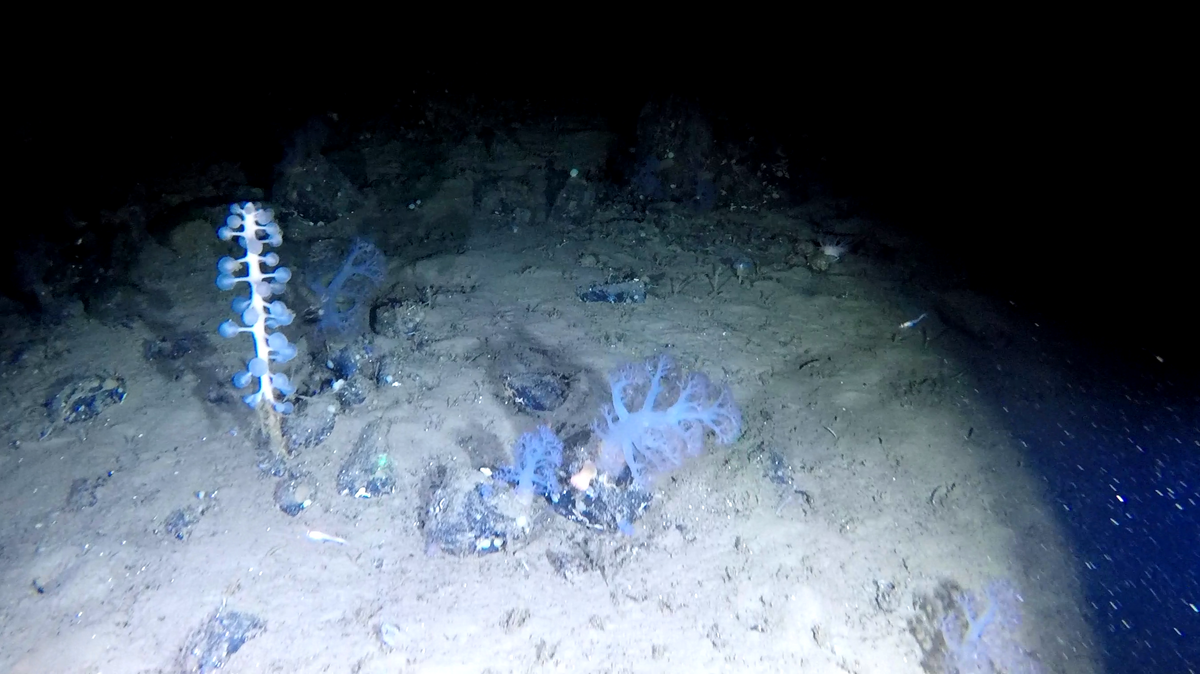
With the increase in climate change the importance of polar regions to take up and store CO2 is increasing. Novel vegetated habitats, known for their carbon capture and storage capacity, such as seagrass beds, salt-marshes and macroalgae are emerging from regions formerly dominated by ice. At the same time, habitat types already known to capture and store disproportionately large amounts of carbon such as fjord systems are becoming more accessible to human exploitation and require protection if we want to avoid already stored carbon to return to the atmosphere. However, we do not fully understand yet how much carbon is stored in the different habitats, or which regions in the Arctic might be particularly important for carbon uptake and storage and how these carbon stores are affected by climate change. Often, we do not even know where some of these habitats are, such as saltmarshes in Greenland. We work with a variety of methods, ranging from remote sensing to laboratory experiments to better understand and protect carbon rich habitats in the Arctic.
Members:
Jakob Thyrring thyrring@ecos.au.dk
Relevant links: https://pure.au.dk/portal/en/projects/tracing-the-fate-of-macroalgae-with-a-focus-on-blue-carbon-proces/ and https://pomp-project.eu
Key words: Climate Change, Carbon Storage, Mitigation, Negative feedback, Carbon Uptake
